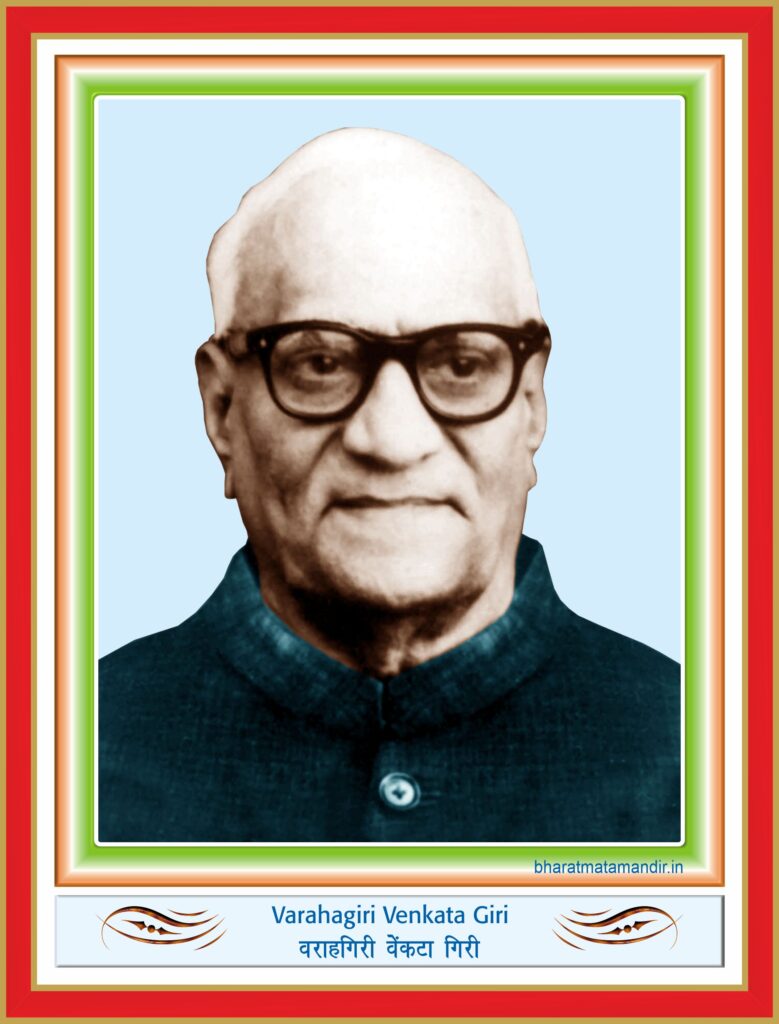
V. V. Giri was a distinguished Indian freedom fighter, labour leader, diplomat, and statesman who served as the 4th President of India from 1969 to 1974. He was born on 10 August 1894 in Berhampur (now in Odisha) and played an important role in both the freedom movement and independent India’s political development.
V. V. Giri was deeply involved in the Indian freedom struggle and was associated with the Indian National Congress. He was particularly known for his work in the labour movement. Inspired by Gandhian ideals, he worked tirelessly to organize workers and protect their rights. He played a key role in forming and strengthening trade unions in India and became one of the earliest champions of labour welfare.
Before independence, V. V. Giri represented Indian labour interests at international forums, including the International Labour Organization (ILO). After independence, he held several important positions such as Governor of Uttar Pradesh, Governor of Kerala, and Vice President of India.
In 1969, V. V. Giri was elected President as an independent candidate, a rare and historic event in Indian politics. As President, he upheld constitutional values, democratic traditions, and social justice. He was respected for his simplicity, integrity, and concern for the working class.
After completing his presidential term, he retired from active public life. In recognition of his outstanding service to the nation, V. V. Giri was awarded the Bharat Ratna in 1975.
He passed away on 23 June 1980. V. V. Giri is remembered as a champion of workers, a freedom fighter, and a dignified President, whose life reflected dedication to democracy, equality, and national service.