

4
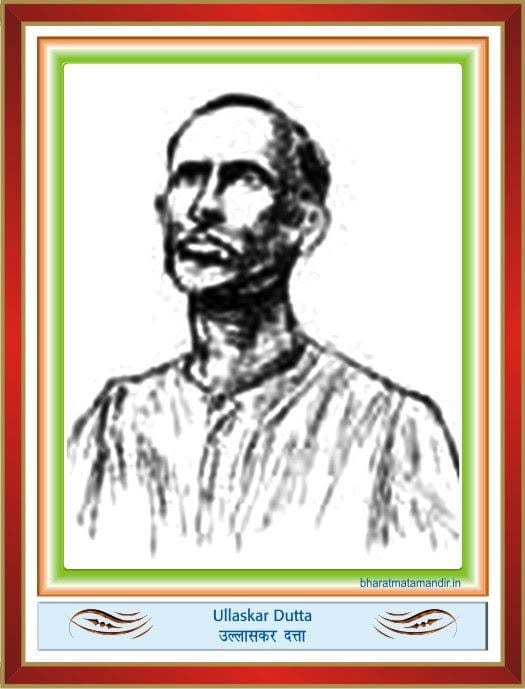
Ullaskar Dutta was a fearless Indian revolutionary and one of the earliest fighters who challenged British rule through armed resistance. He was born on 16 April 1885 in Kalia village, Howrah district, Bengal (now West Bengal). From a young age, Ullaskar Dutta was deeply influenced by nationalist ideas and revolutionary literature.
He became an active member of the revolutionary organization Anushilan Samiti, which aimed to overthrow British rule through secret revolutionary activities. Ullaskar Dutta was particularly skilled in bomb-making and played an important role in supplying explosives to revolutionaries during the early phase of the freedom struggle.
Ullaskar Dutta was one of the key accused in the famous Alipore Bomb Case (1908), which followed an attempt to assassinate British magistrate Kingsford. He was arrested and initially sentenced to death by the British court. Later, due to public pressure, his sentence was commuted to life imprisonment.
He was deported to the dreaded Cellular Jail in the Andaman and Nicobar Islands, where he endured extreme physical and mental torture. Despite inhuman conditions, Ullaskar Dutta remained unbroken in spirit and never abandoned his revolutionary ideals.
After many years of imprisonment, he was released due to ill health. Following independence, Ullaskar Dutta lived a quiet and simple life, largely away from public recognition. He passed away on 7 March 1965.
Ullaskar Dutta is remembered as a symbol of unflinching courage, sacrifice, and revolutionary commitment. His life represents the suffering and bravery of early revolutionaries who laid the foundation for India’s freedom struggle.