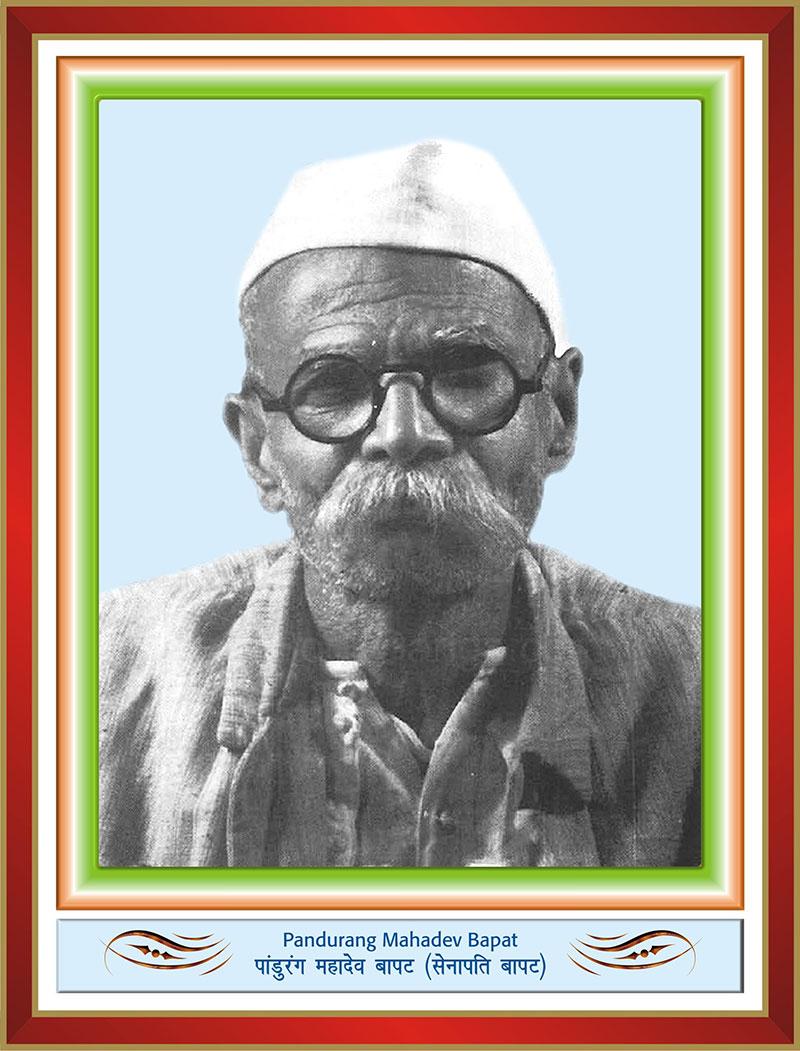
Pandurang Mahadev Bapat (popularly known as Senapati Bapat) was a fearless Indian freedom fighter, revolutionary, and social reformer who played a vital role in India’s independence movement. He was born on 12 November 1880 in Parner, Maharashtra, and is remembered for combining revolutionary courage with Gandhian principles of mass struggle.
Pandurang Mahadev Bapat was initially drawn to revolutionary activities and even learned bomb-making techniques during his time abroad. He was associated with revolutionary circles in Europe and worked alongside Indian nationalists who believed in armed resistance. However, after returning to India, he gradually embraced non-violent mass movements, realizing their power in mobilizing the people.
Bapat is best remembered for leading the historic Mulshi Satyagraha (1921–1924) against the British-backed Tata company, which planned a dam project that would displace local farmers. As the leader of the peasant movement, Bapat organized protests and sacrifices to protect farmers’ land and rights. His leadership earned him the title “Senapati” (Commander) from the people.
He actively participated in the Non-Cooperation Movement, Civil Disobedience Movement, and Quit India Movement, facing imprisonment and hardships without compromising his ideals. Bapat lived a simple life, remained committed to social justice, and worked for the upliftment of peasants and the poor.
Pandurang Mahadev Bapat passed away on 28 November 1967. He is remembered as a symbol of courage, leadership, and people’s power—an inspiring leader who dedicated his life to freedom, farmers’ rights, and national dignity.