
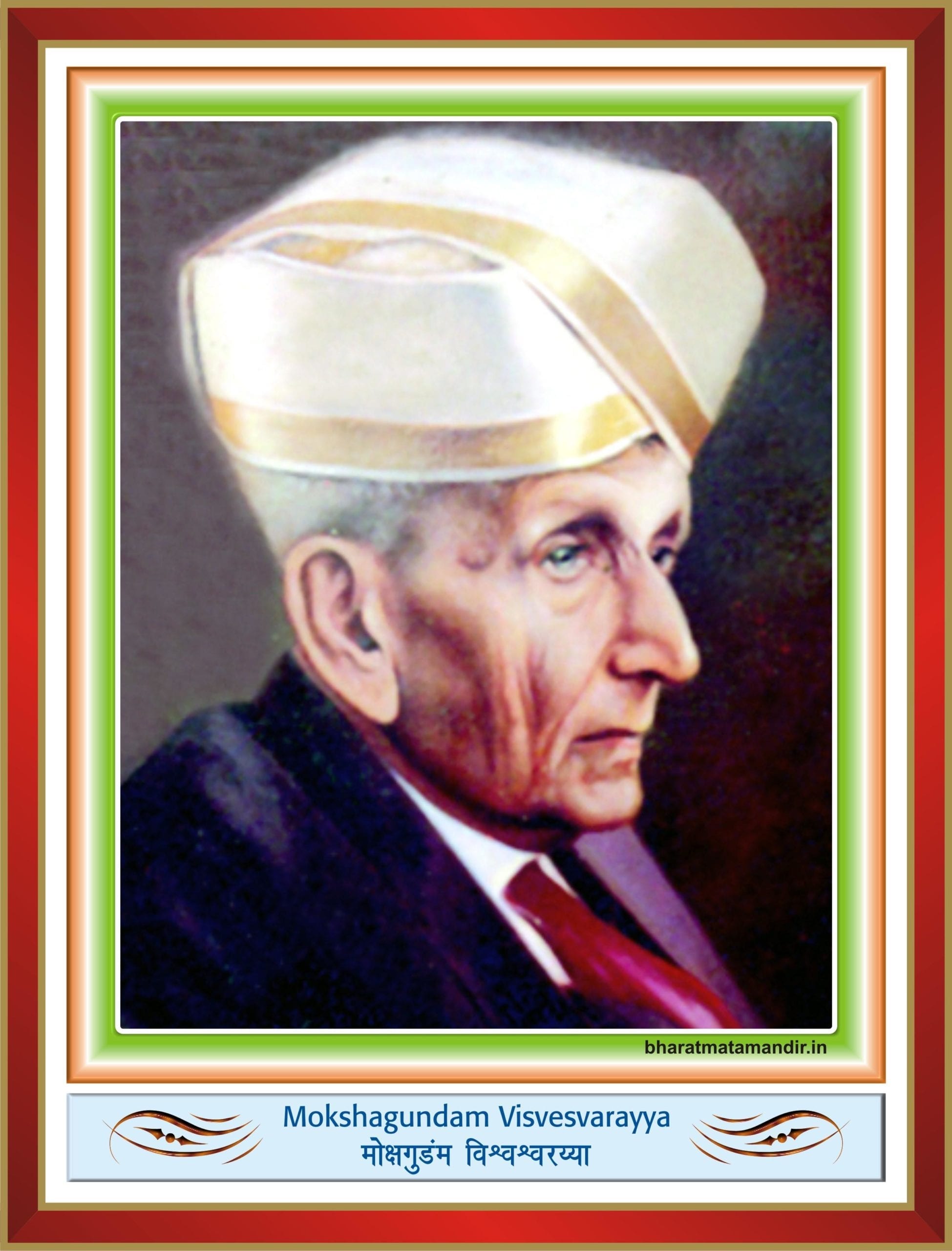
Mokshagundam Visvesvaraya, popularly known as Sir M. Visvesvaraya, was one of India’s greatest engineers, administrators, and nation-builders. He was born on 15 September 1861 in Muddenahalli village (present-day Karnataka). His life is remembered for extraordinary contributions to engineering, public administration, and industrial development in India.
Sir M. Visvesvaraya was a brilliant civil engineer and is regarded as a pioneer of modern engineering in India. He designed and supervised major infrastructure projects such as dams, bridges, irrigation systems, and flood-control mechanisms. His most famous contribution is the Krishna Raja Sagara (KRS) Dam in Karnataka, which introduced innovative automatic floodgates and greatly improved irrigation and water supply.
He served as the Diwan of Mysore (1912–1918) and transformed the princely state into a model of industrial and economic progress. Under his leadership, Mysore saw the establishment of industries, banks, educational institutions, and public utilities. He strongly believed that industrialization and technical education were essential for India’s development.
Sir Visvesvaraya was also a strong advocate of self-reliance and planning. His book Planned Economy for India emphasized systematic development long before independence. For his outstanding service to the nation, he was awarded the Bharat Ratna in 1955.
He passed away on 14 April 1962 at the age of 100. In his honor, 15 September is celebrated as Engineers’ Day in India. Sir M. Visvesvaraya is remembered as a symbol of integrity, discipline, innovation, and dedication to national progress.