
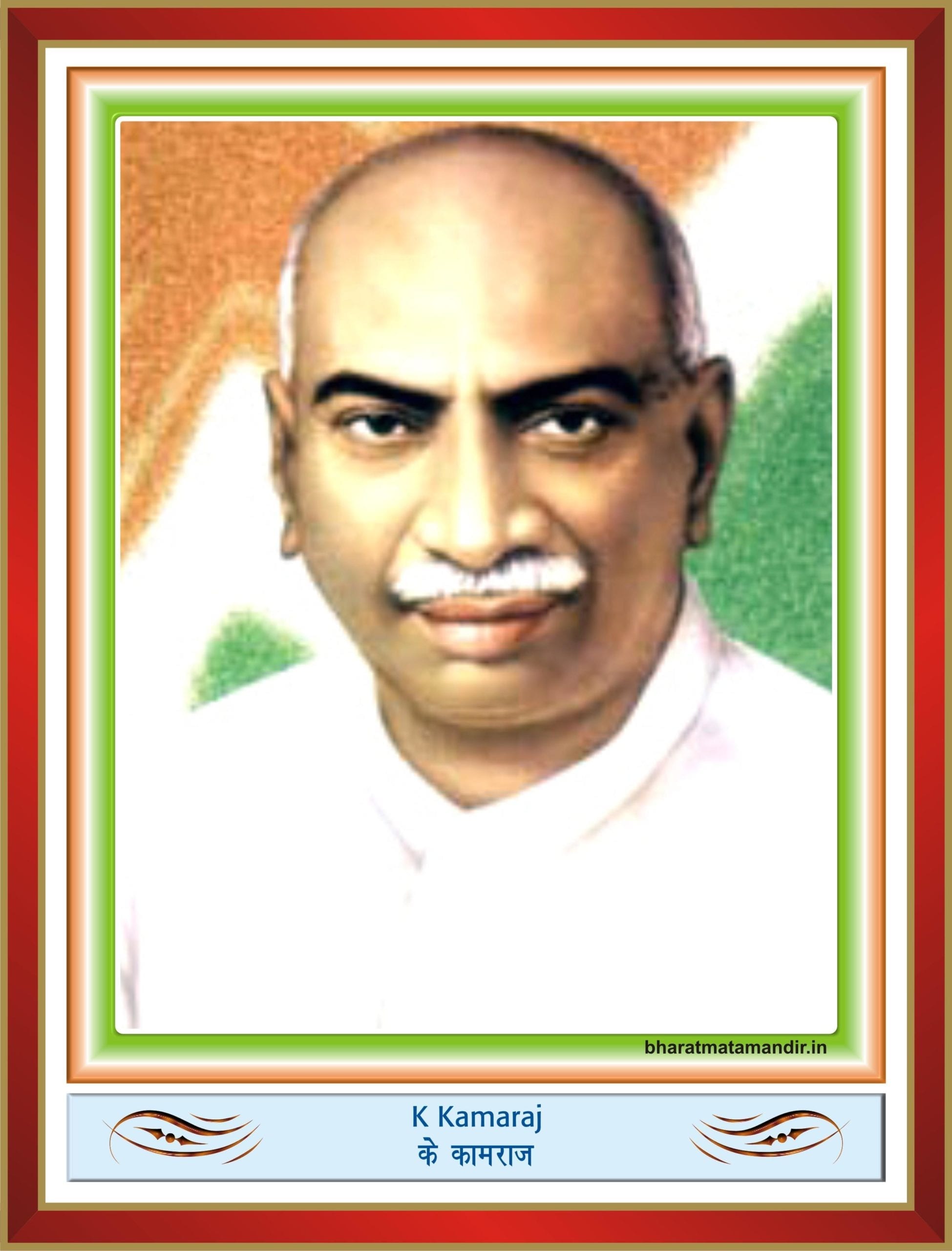
K. Kamaraj was one of India’s most respected freedom fighters, administrators, and political leaders, widely known as the “Kingmaker” of Indian politics. He was born on 15 July 1903 in Virudhunagar, Tamil Nadu, into a humble family. Despite limited formal education, Kamaraj rose to prominence through dedication, honesty, and public service.
Kamaraj actively participated in the Indian freedom movement and was imprisoned several times by the British for his role in protests such as the Non-Cooperation Movement, Civil Disobedience Movement, and Quit India Movement. His commitment to Gandhian ideals of simplicity and service earned him widespread respect.
After independence, Kamaraj served as the Chief Minister of Tamil Nadu (then Madras State) from 1954 to 1963. His tenure is remembered as a golden period of development. He introduced revolutionary education reforms, including free education and the midday meal scheme, which significantly increased school enrollment among poor children. He also focused on irrigation, power generation, and industrial growth, laying a strong foundation for the state’s progress.
At the national level, Kamaraj played a crucial role in shaping leadership in the Indian National Congress. Through the Kamaraj Plan, he encouraged senior leaders to step down from ministerial posts to strengthen the party organization, earning him the title “Kingmaker.”
K. Kamaraj passed away on 2 October 1975. He was posthumously awarded the Bharat Ratna in 1976. He is remembered as a symbol of integrity, simplicity, and people-centered governance, whose life continues to inspire Indian democracy.