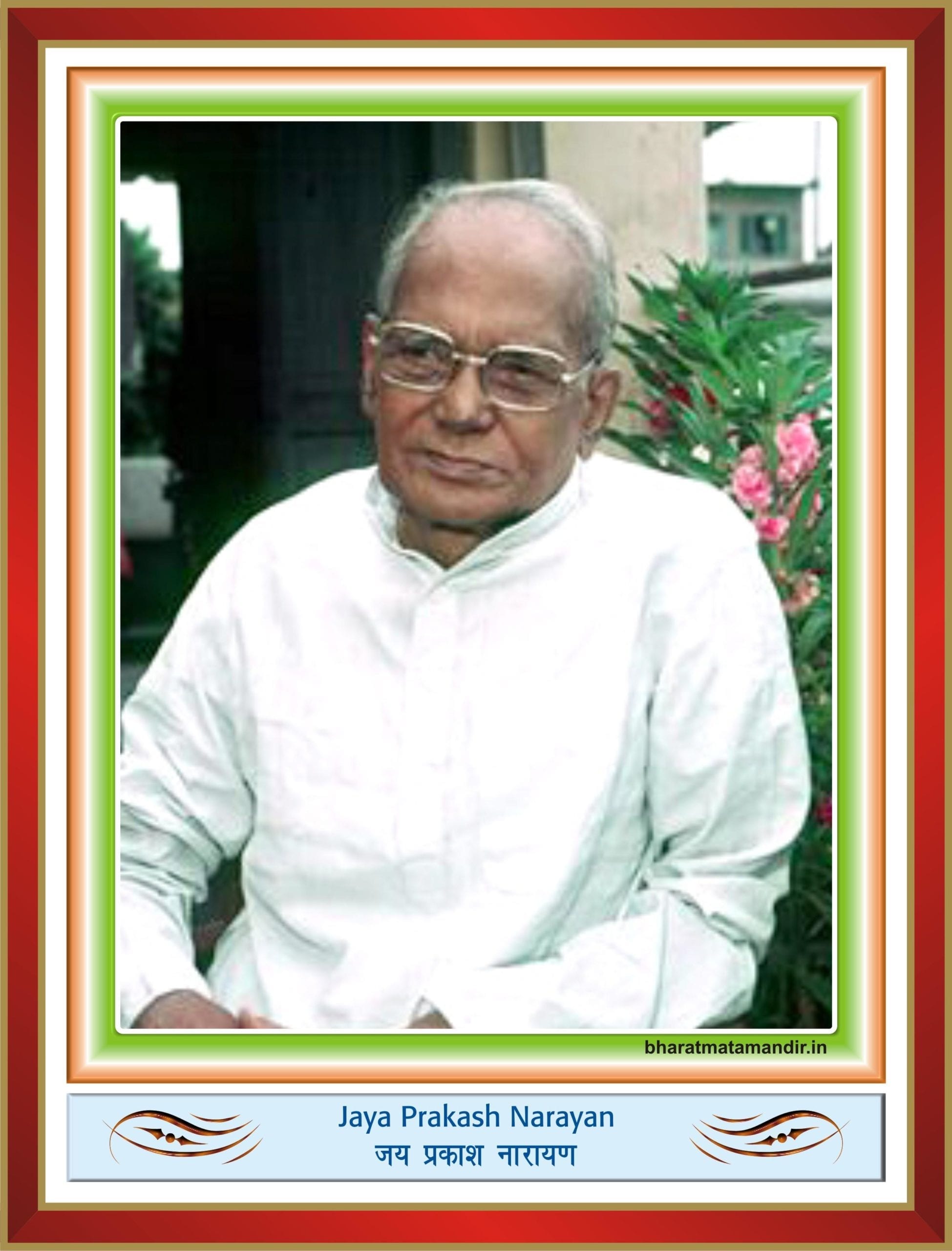
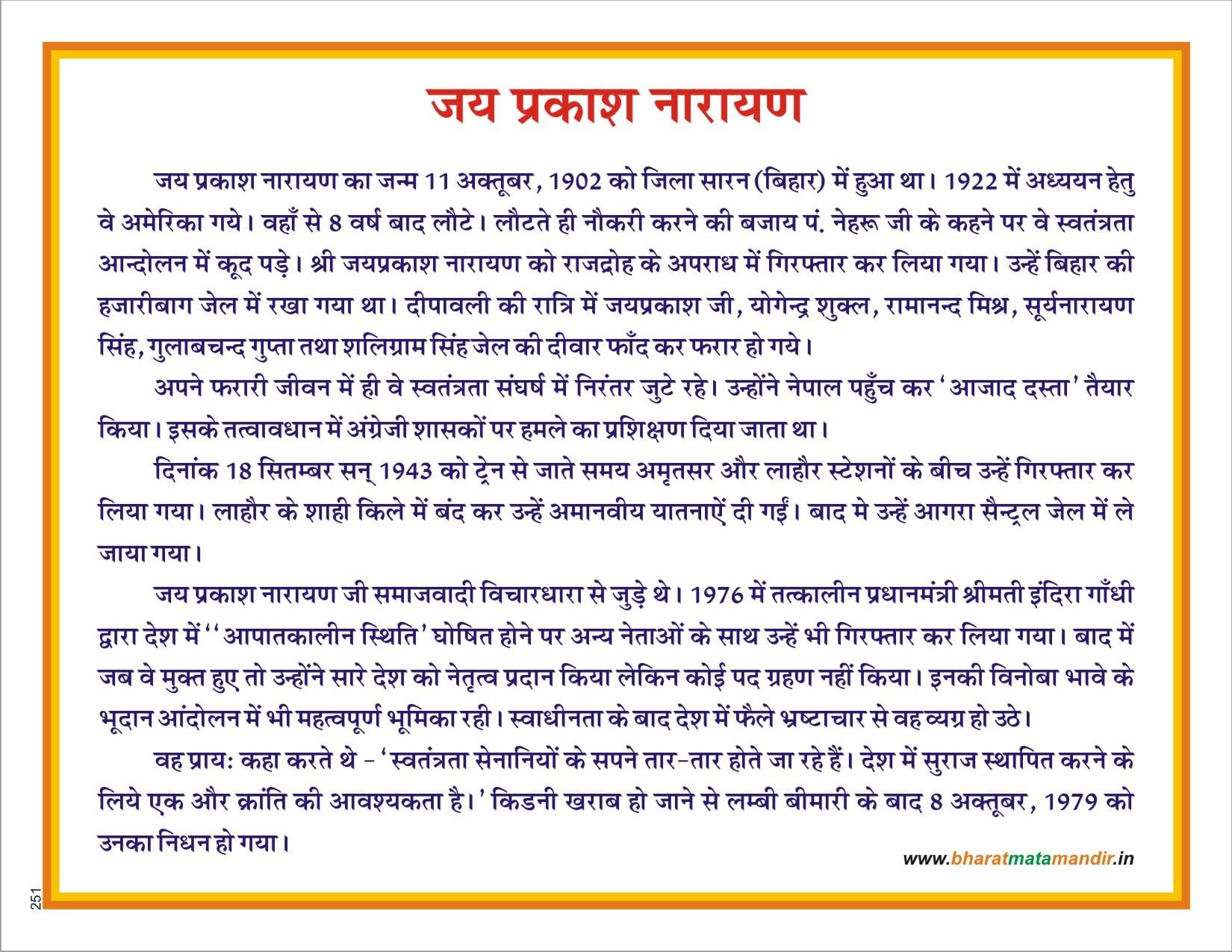
Jayaprakash Narayan, popularly known as JP, was one of India’s most respected freedom fighters, socialist thinkers, and champions of democracy. He was born on 11 October 1902 in Sitab Diara, Bihar. From a young age, he showed a strong commitment to justice, equality, and national service.
Jayaprakash Narayan actively participated in the Indian freedom movement and was deeply influenced by Mahatma Gandhi. He played a major role in the Quit India Movement of 1942, for which he was arrested and imprisoned by the British. Known for his courage and leadership, JP even escaped from jail and continued underground resistance against colonial rule.
After independence, Jayaprakash Narayan chose not to hold political office, believing that moral leadership was more important than power. He dedicated himself to social service, Sarvodaya (welfare of all), and the upliftment of the poor. He strongly believed in participatory democracy and ethical politics.
In the 1970s, JP emerged as the central figure in the historic Total Revolution (Sampoorna Kranti) movement. He led a nationwide movement against corruption, authoritarianism, and misuse of power, especially during the Emergency (1975–77). His call for peaceful resistance inspired millions and ultimately contributed to the restoration of democracy in India.
Jayaprakash Narayan passed away on 8 October 1979. He was posthumously awarded the Bharat Ratna in 1999. JP Narayan is remembered as the “conscience-keeper of Indian democracy”, a selfless leader who devoted his life to freedom, justice, and democratic values.