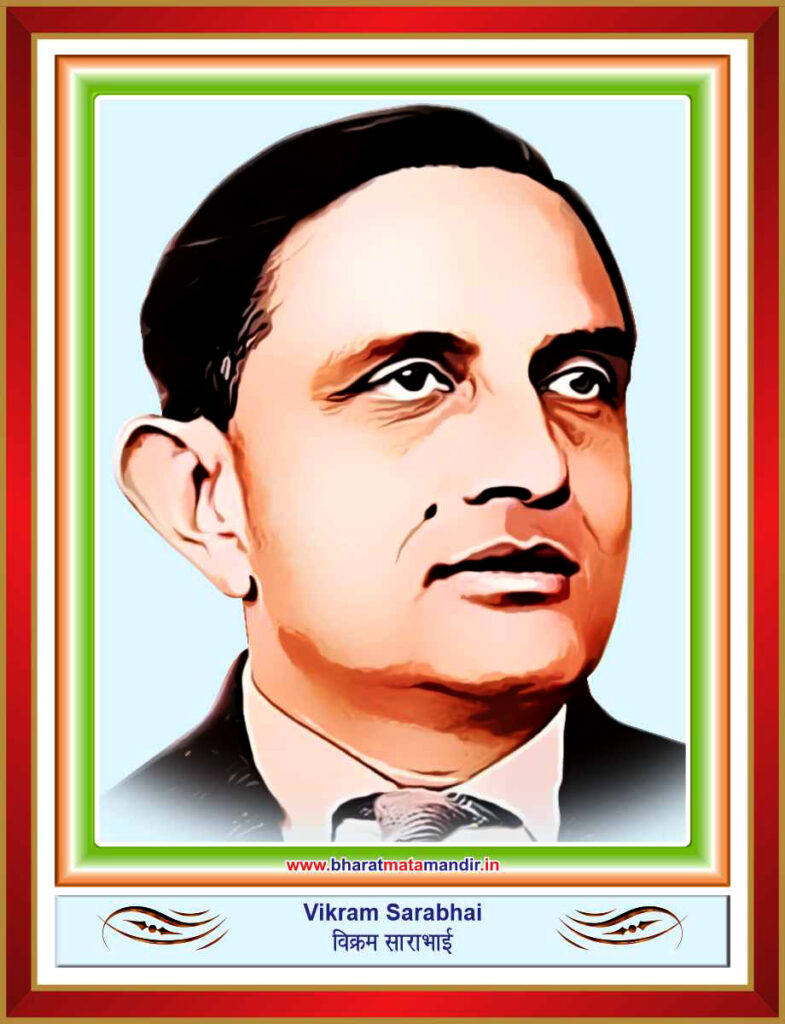
Vikram Sarabhai was a visionary scientist, industrialist, and the father of India’s space programme. He was born on 12 August 1919 in Ahmedabad, Gujarat, into a progressive and well-educated family. From an early age, he showed deep interest in science and innovation.
Vikram Sarabhai believed that science and technology should be used for national development. After studying at Cambridge University, he returned to India and devoted himself to building scientific institutions. He played a key role in founding the Indian Space Research Organisation (ISRO) and laid the foundation of India’s space programme in the 1960s.
Under his leadership, India focused on using space technology for communication, weather forecasting, education, agriculture, and disaster management, rather than only for prestige or military purposes. He also established important institutions such as the Physical Research Laboratory (PRL) in Ahmedabad and contributed to the growth of atomic energy and scientific research in India.
Vikram Sarabhai strongly believed in nurturing young talent and encouraged scientific temper among Indians. His vision helped India become a major space power in later decades.
He passed away on 30 December 1971 at the age of 52. In recognition of his immense contribution, he was awarded the Padma Bhushan and Padma Vibhushan posthumously.
Vikram Sarabhai is remembered as a nation-builder and visionary scientist whose dream transformed India into a leading space-faring nation and continues to inspire generations of scientists and innovators. 🚀