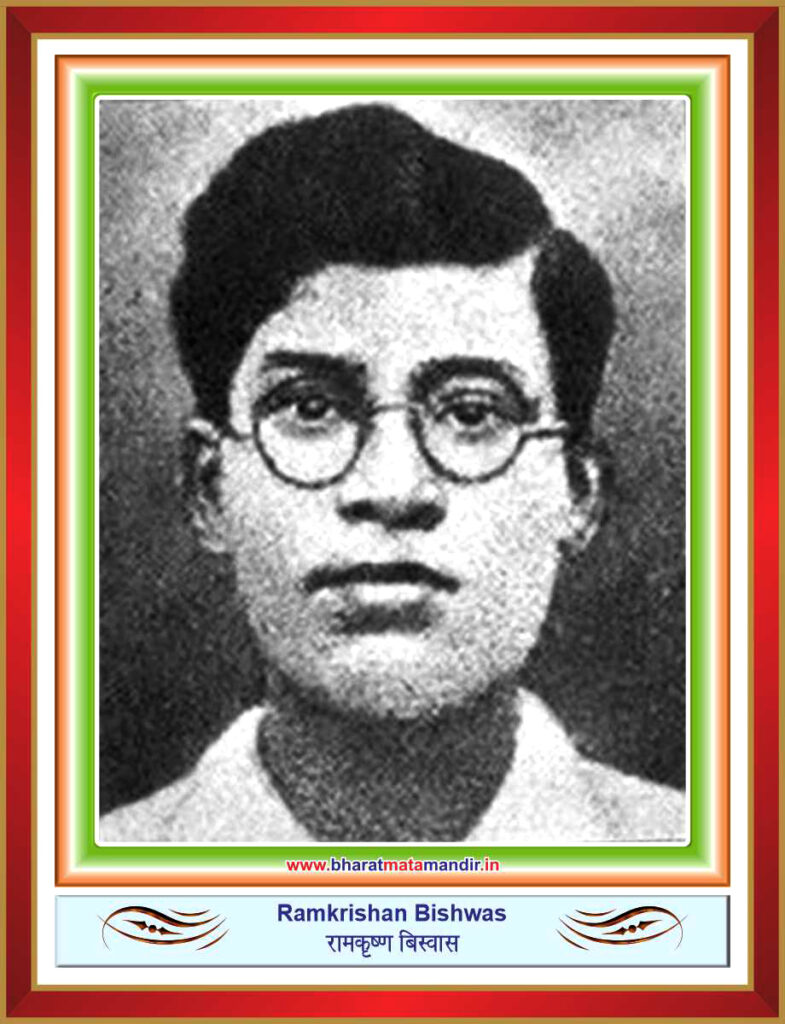
Ramkrishan Biswas (often spelled Ramkrishan Bishwas) was a brave Indian revolutionary and one of the earliest martyrs of India’s armed freedom struggle against British rule. He was born in 1894 in Narayanganj (now in Bangladesh) and was deeply influenced by revolutionary nationalism at a young age.
Ramkrishan Biswas became associated with the revolutionary movement in Bengal and believed that direct action was necessary to end British oppression. He is best remembered for his role in the attempted assassination of Sir Andrew Fraser, the Lieutenant Governor of Bengal, in 1908. The plan was aimed at striking a powerful symbol of colonial authority. However, the attempt failed, and Ramkrishan Biswas was arrested by the British.
Despite his young age, he faced trial with courage and dignity. He never expressed regret for his actions and remained firm in his belief that sacrifice for the nation was his highest duty. The British government sentenced him to death, making him one of the youngest revolutionaries to be executed.
Ramkrishan Biswas was hanged on 21 May 1910 at the age of just 16 years, becoming the youngest martyr of the Indian freedom struggle. His execution shocked the nation and intensified revolutionary sentiment across Bengal and India.
Ramkrishan Biswas is remembered as a symbol of youthful courage, sacrifice, and patriotism. His life stands as a powerful reminder that even the youngest sons of India were ready to give everything for the dream of freedom.