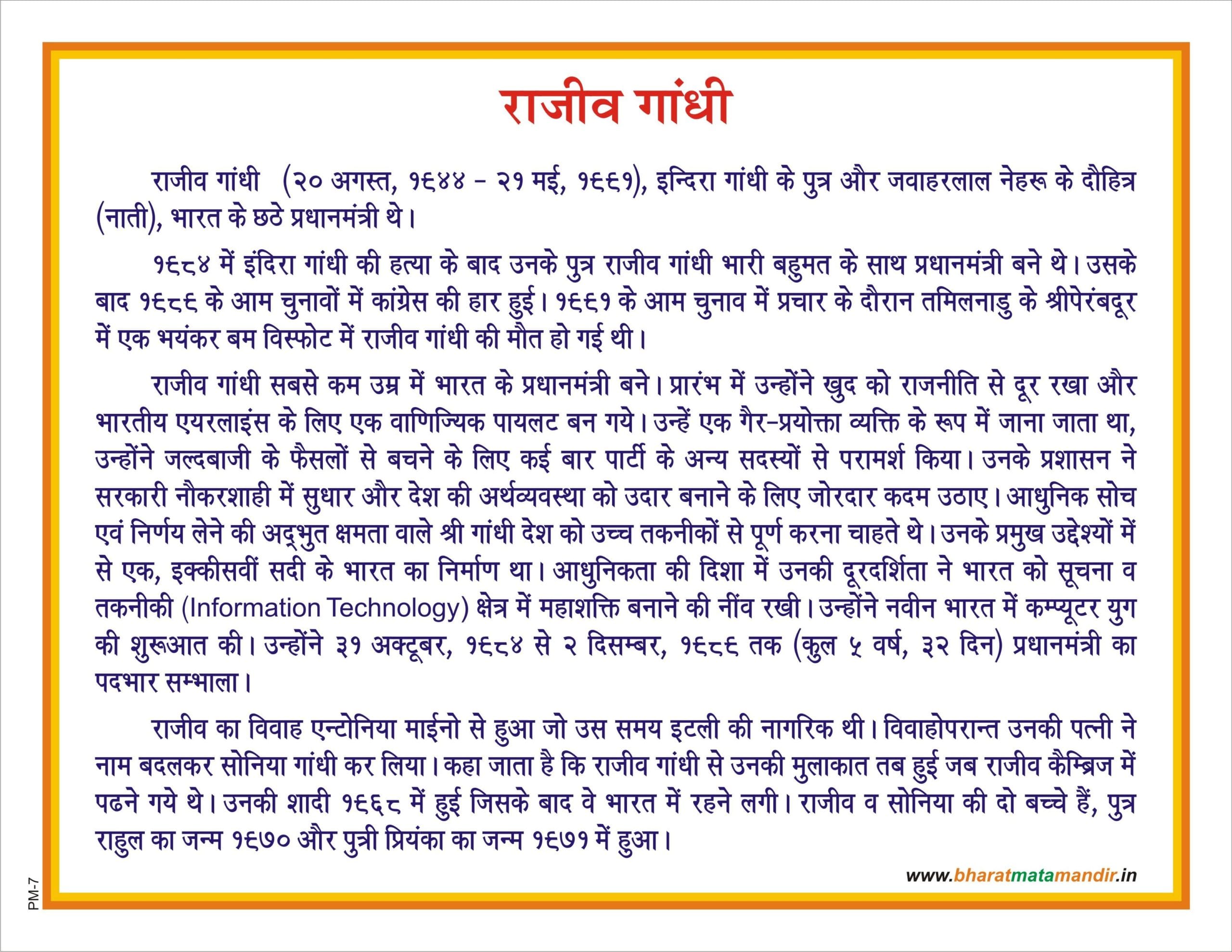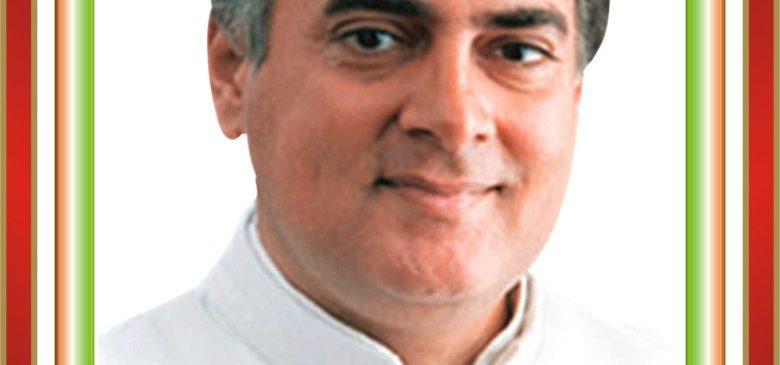
Rajiv Gandhi was a dynamic Indian statesman who served as the 6th Prime Minister of India from 1984 to 1989. He was born on 20 August 1944 in Bombay (now Mumbai) into the Nehru–Gandhi family. He was the son of Prime Minister Indira Gandhi and grandson of Jawaharlal Nehru, India’s first Prime Minister.
Rajiv Gandhi entered politics unexpectedly after the assassination of his mother in 1984. At the age of 40, he became the youngest Prime Minister of India. He represented a new generation of leadership and brought a fresh, modern outlook to Indian politics. His tenure focused on modernization, technology, and youth empowerment.
Rajiv Gandhi played a crucial role in promoting computerization, telecommunications, and information technology in India, laying the foundation for the country’s future as an IT powerhouse. He emphasized education, science, and innovation, and worked to reduce bureaucratic delays and corruption. His government also strengthened local self-governance through initiatives that later evolved into the Panchayati Raj reforms.
In foreign policy, Rajiv Gandhi supported peace initiatives and disarmament and worked to improve relations with neighboring countries. Despite facing challenges and controversies, he remained committed to democratic values and national development.
On 21 May 1991, Rajiv Gandhi was assassinated during an election campaign in Sriperumbudur, Tamil Nadu. His death shocked the nation and the world. He was posthumously awarded the Bharat Ratna in 1991.
Rajiv Gandhi is remembered as a visionary leader who sought to take India into the 21st century, especially by empowering youth and embracing science and technology.