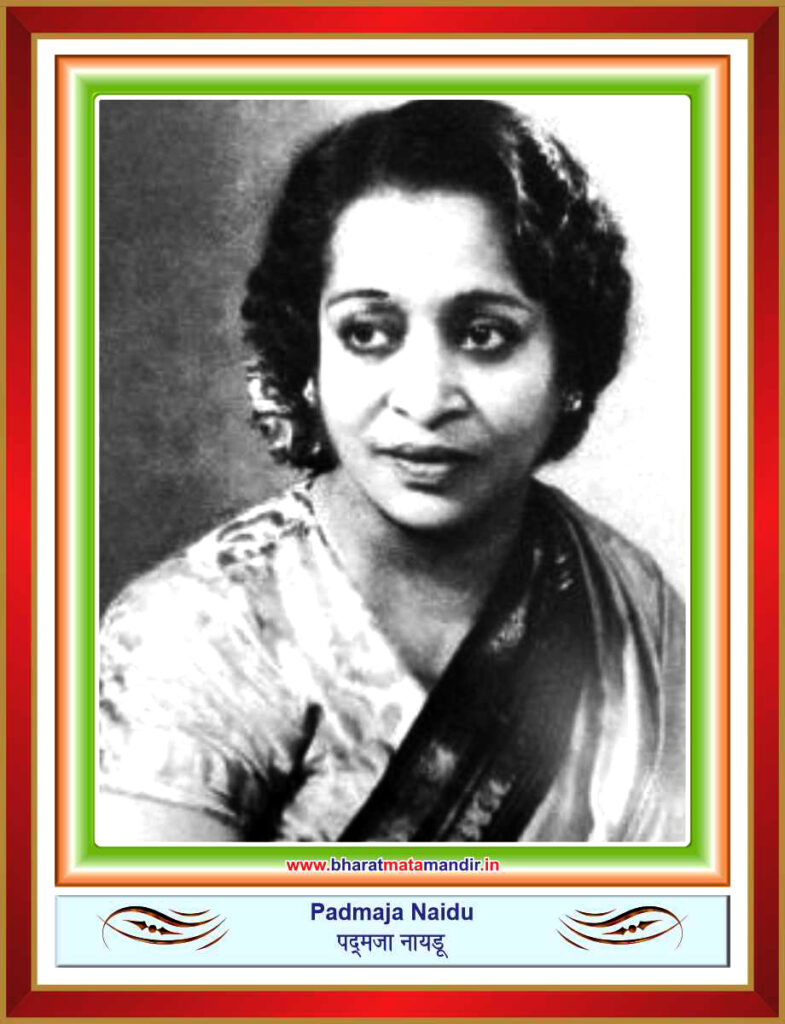
Padmaja Naidu was a prominent Indian freedom fighter, political leader, and administrator who played an important role in India’s national movement and post-independence public life. She was born on 21 November 1900 and was the daughter of the famous poet and nationalist leader Sarojini Naidu.
Inspired by her mother and Mahatma Gandhi, Padmaja Naidu joined the Indian freedom struggle at a young age. She actively participated in movements such as the Civil Disobedience Movement and the Quit India Movement, during which she was arrested and imprisoned by the British authorities. Her courage and commitment earned her respect among national leaders and the public.
After independence, Padmaja Naidu continued to serve the nation in various important roles. She became a member of Parliament and later made history by becoming the Governor of West Bengal (1956–1967). She was the first woman Governor of West Bengal, and her tenure was marked by administrative efficiency, dignity, and concern for social welfare.
Padmaja Naidu was also associated with cultural and humanitarian organizations. She worked actively with the Indian Red Cross Society and supported causes related to women, children, and the underprivileged.
She passed away on 2 May 1975. Padmaja Naidu is remembered as a fearless freedom fighter, capable administrator, and graceful leader who carried forward the legacy of service, patriotism, and women’s leadership in modern India.