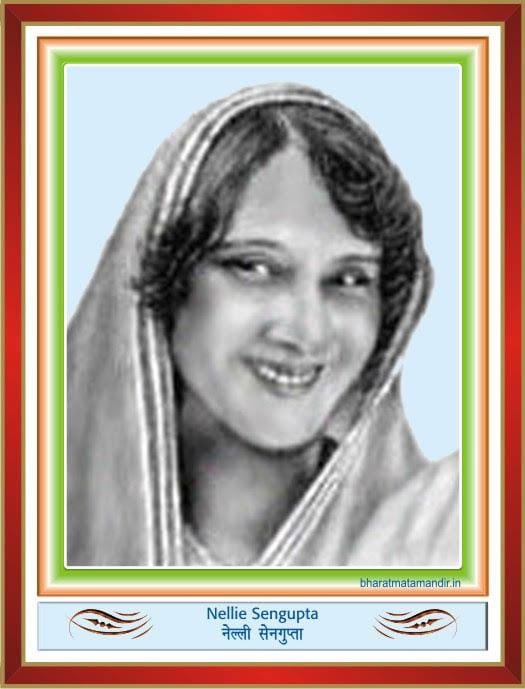
Nellie Sengupta was a prominent freedom fighter and the first woman to preside over the Indian National Congress. She was born on 1 September 1886 in England as Edith Ellen Gray, and later came to India after marrying Indian nationalist Jatindra Mohan Sengupta. Deeply influenced by India’s struggle for independence, she dedicated her life to the cause of freedom.
Nellie Sengupta actively participated in the Indian freedom movement and supported Gandhian principles of non-violence and civil disobedience. She took part in movements such as the Non-Cooperation Movement and the Civil Disobedience Movement, often facing arrests and hardships at the hands of British authorities. Despite being of foreign origin, she showed complete devotion to India’s cause, earning great respect among Indian leaders and the masses.
Her most historic contribution came in 1933, when she was elected as the President of the Indian National Congress at the Calcutta session. At a time when many Congress leaders were imprisoned by the British, her leadership symbolized resilience, international solidarity, and the important role of women in the freedom struggle.
After independence, Nellie Sengupta continued to work for social causes and public welfare. She passed away on 23 October 1973.
Nellie Sengupta is remembered as a remarkable example of international support, women’s leadership, and selfless patriotism, proving that love for freedom and justice knows no national boundaries.