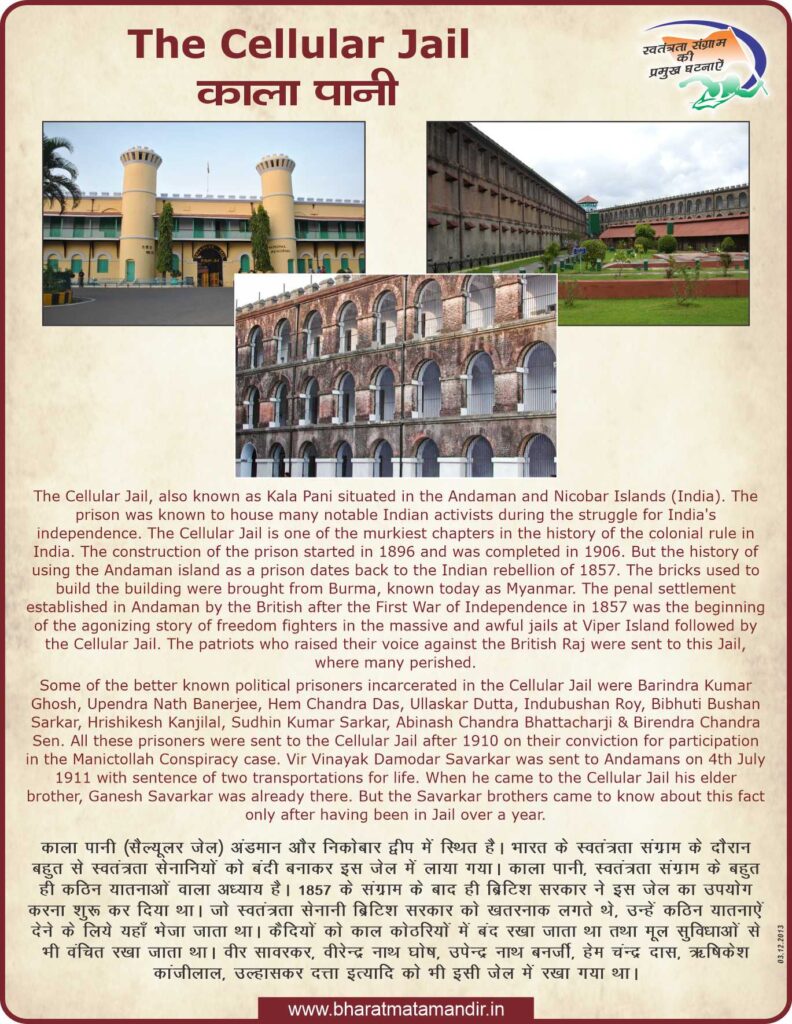
Cellular Jail Diwas is observed to remember the immense sacrifices made by Indian freedom fighters who were imprisoned by the British in the infamous Cellular Jail, also known as Kala Pani. This day honors the courage, suffering, and patriotism of those who endured extreme hardships for India’s independence.
The Cellular Jail was constructed by the British in Port Blair between 1896 and 1906. It was designed as a high-security prison to isolate political prisoners from the mainland. Freedom fighters such as Batukeshwar Dutt, Vinayak Damodar Savarkar, and many others were sent here. Prisoners were kept in solitary confinement, subjected to brutal punishments, forced labor, starvation, and inhuman treatment. The purpose was to break their spirit, but instead, it strengthened their resolve and love for the nation.
Cellular Jail Diwas reminds us of the dark chapter of colonial oppression and the extraordinary resilience of Indian revolutionaries. Despite unbearable suffering, many prisoners continued to resist British rule through hunger strikes, protests, and unwavering faith in freedom. Several martyrs lost their lives within the prison walls, making the jail a sacred place of national memory.
Today, the Cellular Jail stands as a National Memorial. Observing Cellular Jail Diwas inspires citizens, especially the youth, to value freedom, uphold democratic ideals, and remember that independence was achieved through great sacrifice. It is a day of respect, reflection, and gratitude toward those who gave everything for the nation’s liberty.