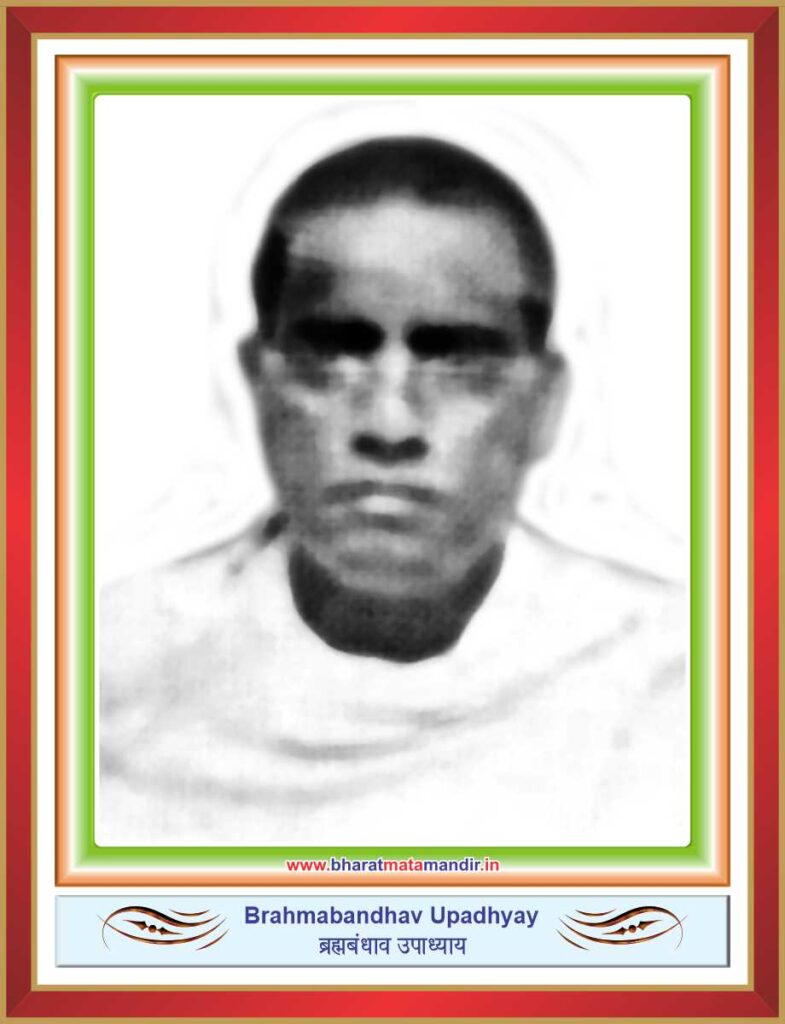
Brahmabandhav Upadhyay was a distinguished Indian nationalist, philosopher, writer, and freedom fighter who played an important role in India’s intellectual and political awakening during the British period. He was born in 1861 in Bengal as Bhavani Charan Banerjee. Deeply influenced by Indian philosophy, spirituality, and nationalism, he later adopted the name Brahmabandhav Upadhyay, meaning “friend of Brahman (Truth).”
Brahmabandhav Upadhyay was known for his sharp intellect and fearless writings. He strongly opposed British imperialism and believed that true freedom could be achieved only when Indians regained pride in their own culture, religion, and traditions. Through his essays and articles, he emphasized the harmony between Indian spiritual thought and modern ideas of freedom and self-respect.
He was also a close associate of Rabindranath Tagore and actively participated in the Swadeshi Movement. Brahmabandhav Upadhyay encouraged the use of indigenous goods and the rejection of foreign products as a form of peaceful resistance against British rule. His writings inspired many young Indians to think critically and act courageously for the nation.
Due to his nationalist activities, he was arrested by the British and imprisoned. His health deteriorated in jail, and he passed away in 1907 shortly after his release. Though his life was short, his contribution to India’s freedom struggle was profound.
Brahmabandhav Upadhyay is remembered as a bold thinker and patriot who combined spirituality, nationalism, and intellectual courage in the fight for India’s independence.