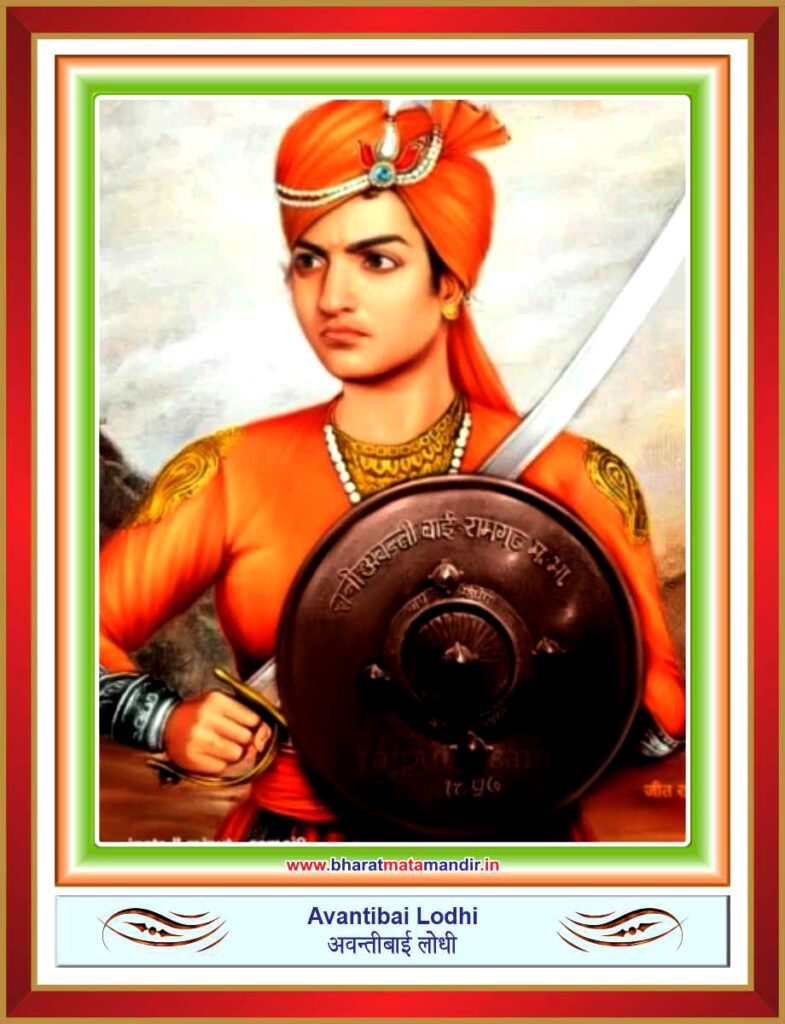
Avantibai Lodhi (1831–1858) was a prominent queen and freedom fighter who played a courageous role in India’s First War of Independence in 1857. She was the queen of the princely state of Ramgarh (in present-day Madhya Pradesh) and is remembered for her leadership, bravery, and resistance against British colonial rule.
Avantibai was married to Raja Vikramaditya Singh Lodhi of Ramgarh. When the king became seriously ill and incapable of ruling, the British East India Company attempted to take advantage of the situation by applying the Doctrine of Lapse and interfering in the administration of the state. Avantibai firmly opposed this intervention. Refusing to accept British authority, she assumed control of the kingdom and began organizing resistance.
During the 1857 revolt, Avantibai emerged as a key leader in central India. She mobilized local chiefs, tribal communities, and soldiers, forming a strong force to challenge the British. She led her army personally, riding into battle and inspiring her followers with her determination. Under her leadership, Ramgarh became an important center of rebellion against British rule.
Despite her valiant efforts, the British launched a strong counteroffensive. After suffering military setbacks and facing betrayal by some allies, Avantibai was forced to retreat to the forests near Devharigarh. Rather than surrender to the British, she chose to fight until the end. In March 1858, when defeat became inevitable, she embraced martyrdom, reportedly taking her own life with a sword.
Avantibai Lodhi is remembered as a symbol of female leadership and resistance in India’s freedom struggle. Her sacrifice highlights the vital role played by women in challenging colonial oppression and defending India’s sovereignty and dignity.