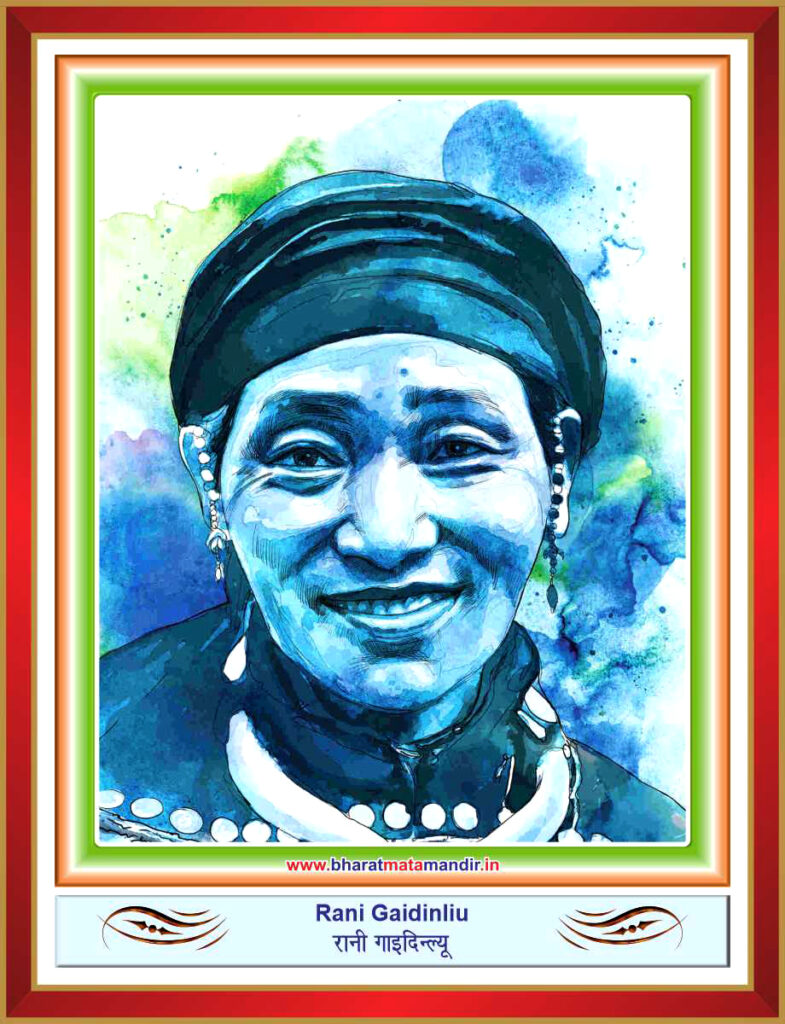
Rani Gaidinliu was a brave tribal freedom fighter and spiritual leader from Northeast India who resisted British rule at a very young age. She was born on 26 January 1915 in Nungkao village (present-day Manipur) and belonged to the Zeliangrong Naga tribe.
Rani Gaidinliu joined the freedom movement as a teenager under the guidance of her cousin and leader Jadonang, who led a movement against British oppression and forced labor. After Jadonang was executed by the British in 1931, Gaidinliu continued the movement with great courage. At just 16 years of age, she emerged as a leader and mobilized tribal people to oppose British authority and protect their culture, religion, and freedom.
In 1932, Rani Gaidinliu was arrested by the British and sentenced to life imprisonment. She spent 14 years in jail, enduring harsh conditions but never surrendering her ideals. During her imprisonment, Jawaharlal Nehru met her and gave her the title “Rani” (Queen) in recognition of her bravery.
After India’s independence, she was released from prison and continued to work for the welfare, unity, and cultural identity of tribal communities. Her life remained dedicated to social reform and peace.
Rani Gaidinliu passed away on 17 February 1993. She was honored with the Padma Bhushan and later the Bharat Ratna (posthumously). She is remembered as a symbol of courage, resistance, and tribal pride, and one of the youngest freedom fighters in Indian history.