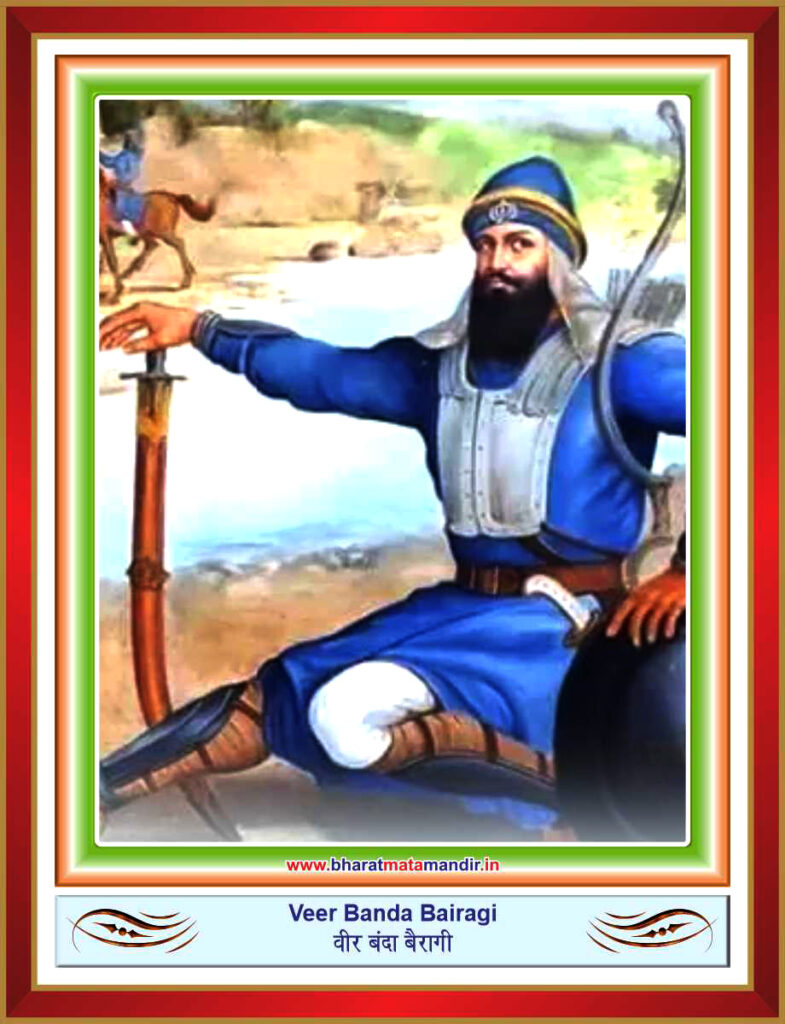
Banda Singh Bahadur, popularly known earlier as Veer Banda Bairagi, was a fearless Sikh warrior, revolutionary leader, and martyr who challenged Mughal tyranny in the early 18th century. He was born in 1670 in Rajouri (present-day Jammu and Kashmir). His original name was Lachhman Dev, and he lived as an ascetic (bairagi) before becoming a warrior for justice.
Banda Bairagi’s life took a decisive turn when he met Guru Gobind Singh in 1708 at Nanded. Guru Gobind Singh inspired him to abandon asceticism and fight oppression. He baptized him, renamed him Banda Singh Bahadur, and entrusted him with the mission of ending Mughal cruelty in Punjab.
As a military leader, Banda Singh Bahadur led powerful campaigns against Mughal officials who were responsible for injustice and persecution of Sikhs. He defeated Mughal forces at Samana, Sadhaura, and Sirhind, where he punished Wazir Khan, the governor responsible for the execution of Guru Gobind Singh’s younger sons. He established the first Sikh rule in parts of Punjab and introduced land reforms, giving ownership rights to farmers.
Banda Singh Bahadur made Lohgarh Fort his capital and issued coins in the name of the Sikh Gurus, symbolizing sovereignty and justice. His rule stood for equality, fairness, and resistance to tyranny.
In 1716, he was captured by the Mughals after a long siege. He was brutally tortured and executed in Delhi, along with hundreds of his followers. He accepted death with unwavering faith and courage.
Veer Banda Bairagi (Banda Singh Bahadur) is remembered as a symbol of bravery, sacrifice, and social justice, and one of the earliest revolutionaries who dared to establish rule based on equality and resistance against oppression in Indian history.