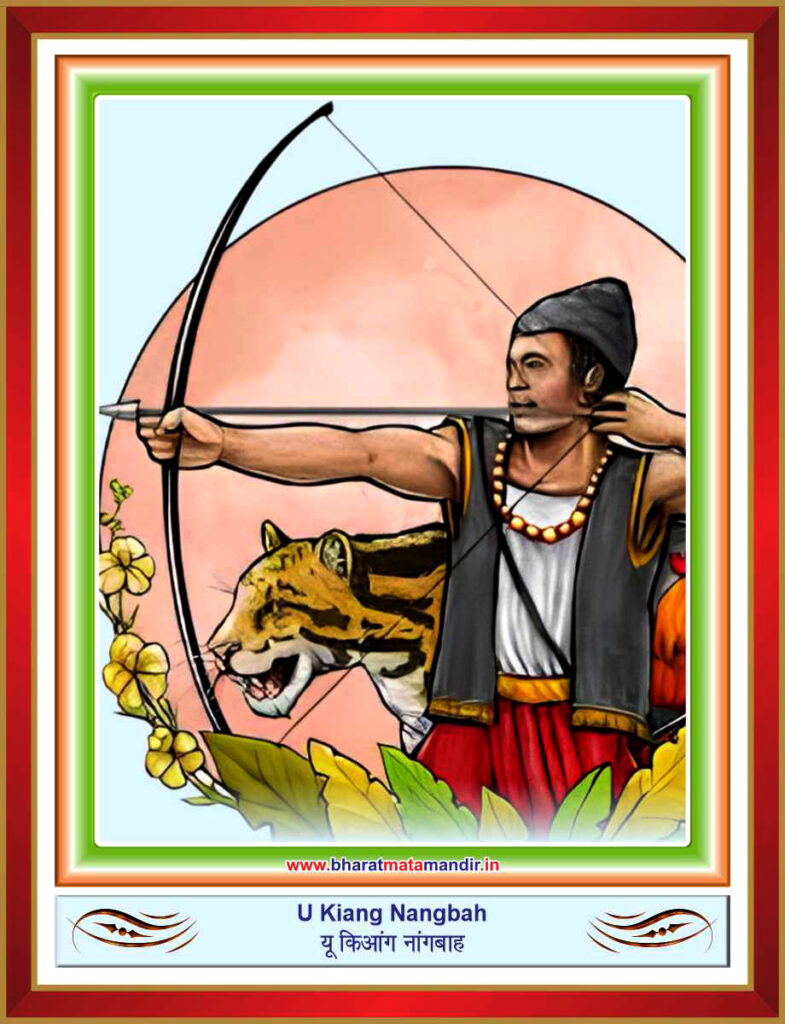
U Kiang Nangbah was a brave tribal leader and one of the earliest martyrs of India’s freedom struggle from Meghalaya. He belonged to the Jaintia (Pnars) tribe and is remembered for leading a courageous resistance against British colonial rule in the Jaintia Hills during the 19th century.
U Kiang Nangbah opposed the British because of their oppressive policies, heavy taxation, forced labor, and interference in local customs and administration. He strongly believed in protecting the freedom, dignity, land, and culture of his people. When British exploitation increased, he mobilized local villagers and tribal warriors to rise against colonial authority.
Around 1862, U Kiang Nangbah led an organized rebellion against the British administration in the Jaintia region. Despite limited resources and weapons, his movement reflected immense courage and unity among the people. The British, however, used superior military force and betrayal to suppress the uprising.
U Kiang Nangbah was eventually captured by the British. After a summary trial, he was publicly hanged on 30 December 1862 at Syntung village (present-day East Jaintia Hills). His execution was meant to terrorize the local population, but instead it turned him into a martyr and symbol of resistance.
Today, U Kiang Nangbah is revered as a national hero of Meghalaya. His sacrifice is commemorated every year, and statues and memorials have been built in his honor. He is remembered as a fearless leader who stood up against injustice and laid down his life to protect the freedom and identity of his people.