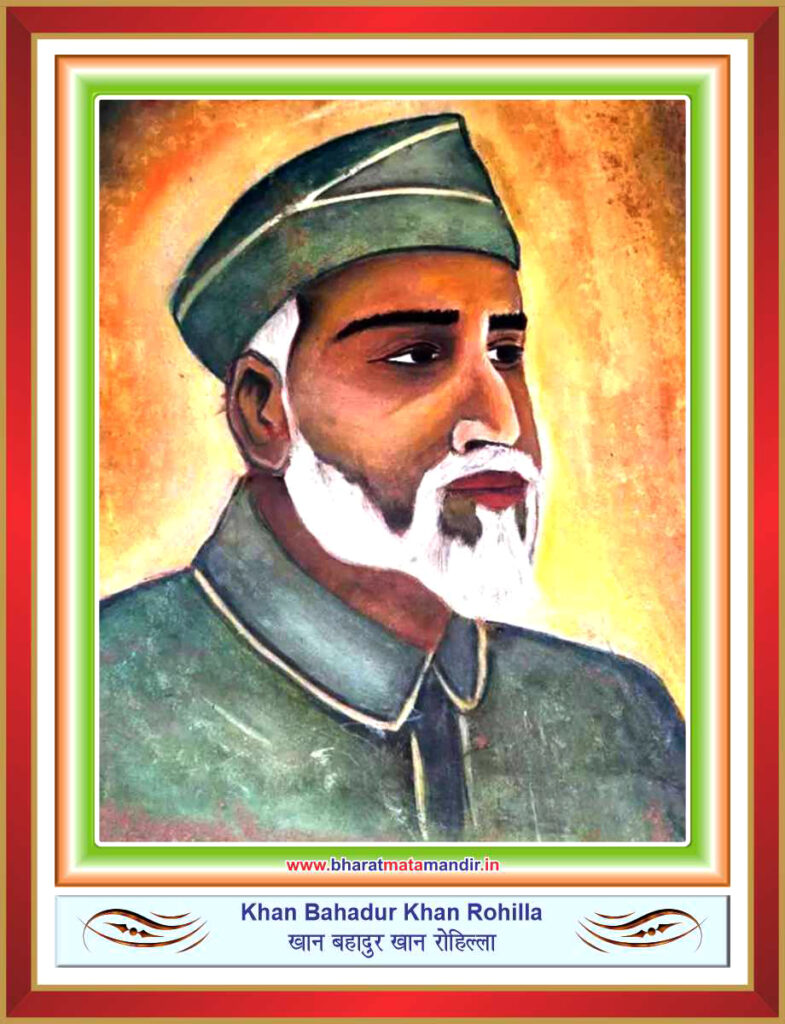
Khan Bahadur Khan Rohilla was a prominent freedom fighter and one of the important leaders of the Revolt of 1857 in northern India. He was the grandson of Hafiz Rahmat Khan, the founder of the Rohilla state, and belonged to the Rohilla Afghan family. Khan Bahadur Khan emerged as a strong symbol of resistance against British rule in the Rohilkhand region.
During the uprising of 1857, Khan Bahadur Khan took charge of Bareilly and declared independence from British authority. He assumed the role of administrator and military leader, organizing forces to fight the British and establishing a parallel government. Under his leadership, Bareilly became a major center of rebellion, inspiring people from nearby regions to join the revolt.
Khan Bahadur Khan strongly opposed British policies, especially their interference in Indian administration and culture. His leadership reflected courage, determination, and a deep sense of patriotism. However, due to lack of unity among rebels and superior British military strength, the revolt was eventually suppressed.
After the British regained control, Khan Bahadur Khan was captured. He was hanged on 24 February 1860. His execution marked the end of major resistance in the Rohilkhand region.
Khan Bahadur Khan Rohilla is remembered as a brave leader who stood fearlessly against colonial oppression. His role in the Revolt of 1857 highlights the widespread nature of India’s first major struggle for independence and the sacrifices made by regional leaders in the fight for freedom.