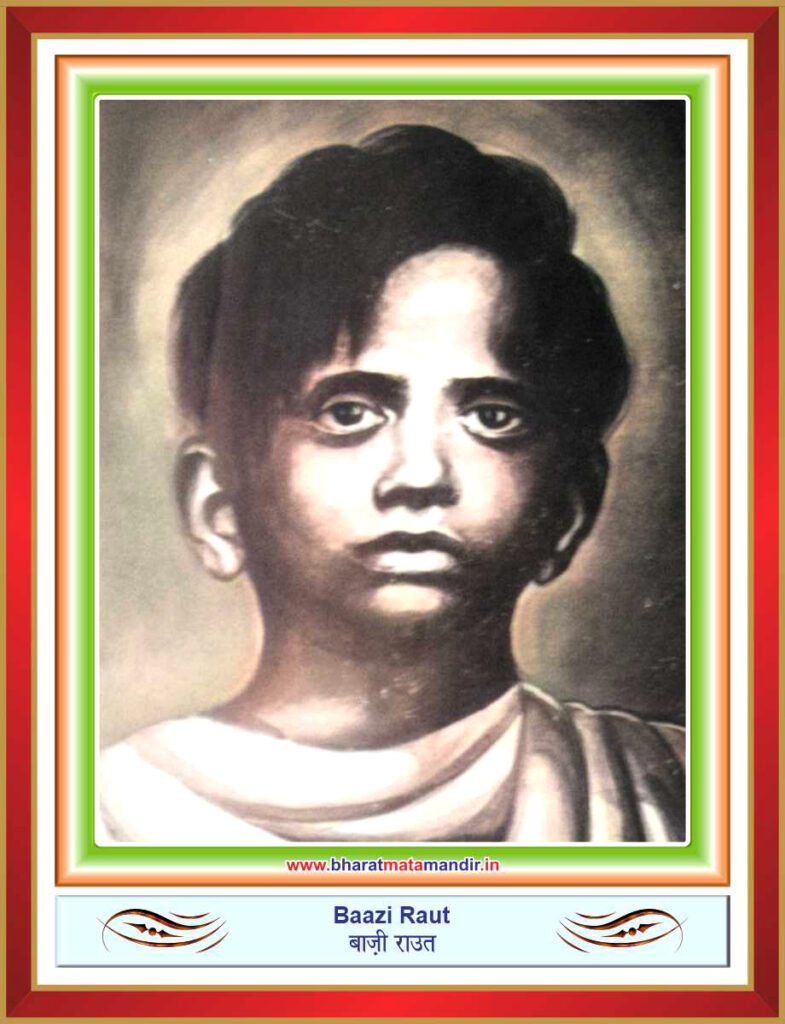
Baazi Raut (1926–1938) was one of the youngest martyrs of India’s freedom struggle, remembered for his extraordinary courage and patriotism at a very young age. He belonged to a poor boatman family in Dhenkanal, in present-day Odisha, and lived during a time when princely states were under indirect British control and local rulers often oppressed their people.
Baazi Raut became associated with the Praja Mandal movement, which was part of the larger struggle against British rule and feudal oppression in princely states. Despite being only 12 years old, he actively participated in activities that supported the movement, such as spreading messages and helping revolutionaries. His bravery and sense of duty made him a symbol of youthful resistance.
On 11 October 1938, British police officers attempted to cross the river Brahmani near Nilkanthapur village while pursuing freedom fighters. They ordered Baazi Raut, who was ferrying people across the river, to take them in his boat. Loyal to the cause of the freedom struggle, Baazi Raut firmly refused, stating that he would not help the British oppressors.
Angered by his defiance, the police shot Baazi Raut on the spot. He died instantly, becoming a martyr at an age when most children are still in school. His sacrifice shocked the nation and drew widespread attention to the brutality of colonial rule in princely states.
Baazi Raut is remembered as India’s youngest martyr. Schools, institutions, and awards in Odisha bear his name, honoring his sacrifice. His life stands as a powerful reminder that the struggle for freedom involved people of all ages and that even a child’s courage can leave a lasting mark on history.