
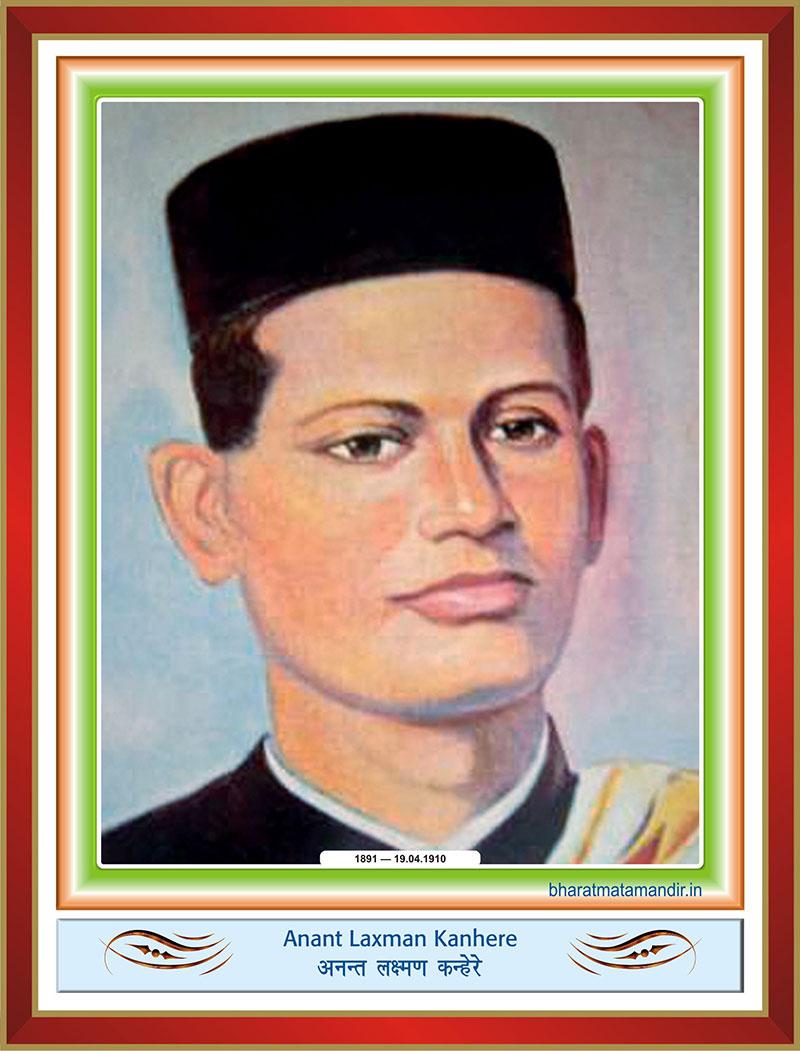
Anant Laxman Kanhere (1910–1930) was a young Indian revolutionary and freedom fighter, remembered for his role in the militant phase of India’s struggle against British colonial rule. Born in a Chitpavan Brahmin family in Maharashtra, Kanhere grew up during a time of intense political awakening, when repressive colonial policies and nationalist movements deeply influenced Indian youth.
Kanhere became associated with revolutionary circles inspired by leaders such as Bal Gangadhar Tilak and organizations that believed armed resistance was necessary alongside mass movements. The immediate context that shaped his actions was the appointment of Sir John Simon’s all-British Simon Commission and the repressive governance of British officials in India. One such official was A. M. T. Jackson, the Collector of Nashik, who was widely viewed by revolutionaries as oppressive and unsympathetic to Indian aspirations.
On 21 December 1929, during a public event at the Vijayadashami festival in Nashik, Anant Kanhere assassinated A. M. T. Jackson by shooting him at close range. Kanhere was only 19 years old at the time. He was immediately arrested and later tried by a British court. Along with his associates, Dattatraya Deshpande and Krishnaji Gopal Karve, he was sentenced to death.
Anant Kanhere was executed by hanging on 19 April 1930. His sacrifice came during a critical year of the freedom struggle, coinciding with Mahatma Gandhi’s Civil Disobedience Movement. Although his methods differed from Gandhian nonviolence, Kanhere came to symbolize the intense patriotism and willingness of young Indians to lay down their lives for independence.
Today, Anant Laxman Kanhere is remembered as a martyr whose courage and commitment reflected the revolutionary zeal of India’s youth under colonial rule.