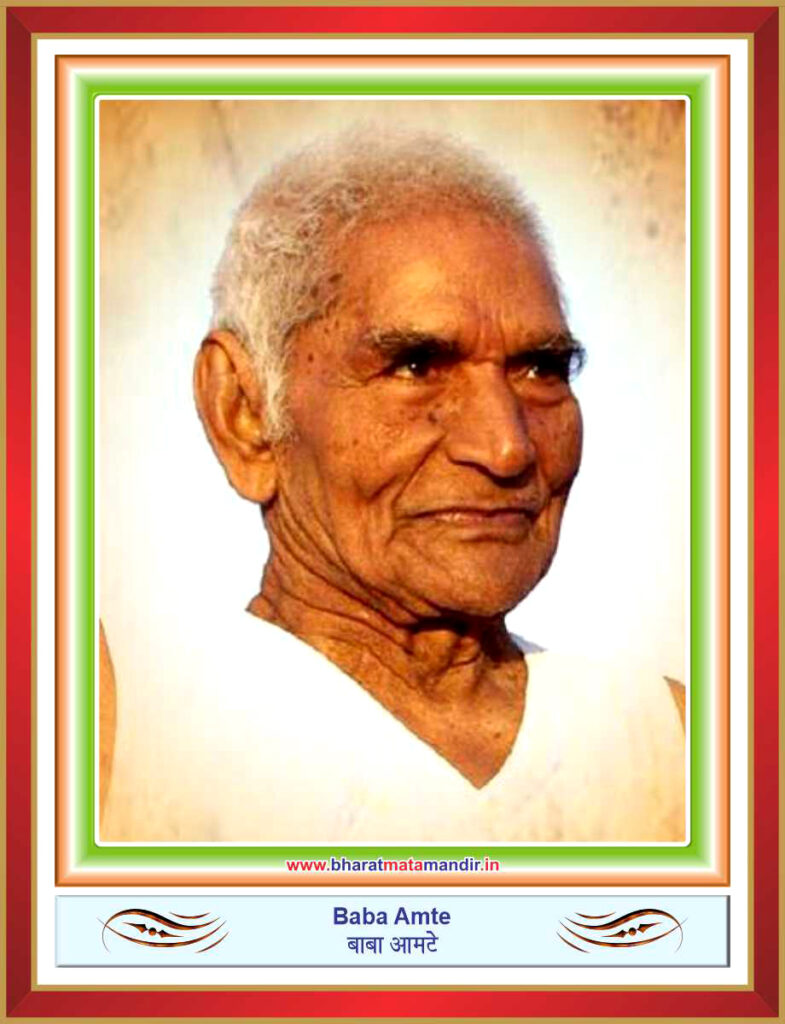
Baba Amte (1914–2008), born Murlidhar Devidas Amte, was a renowned Indian freedom fighter, social reformer, and humanitarian. Though he is best remembered for his lifelong work with people affected by leprosy, his contribution to India’s freedom struggle and post-independence nation-building was deeply significant.
During the British colonial period, Baba Amte was strongly influenced by Mahatma Gandhi’s philosophy of nonviolence, truth, and service. As a young lawyer, he actively participated in the freedom movement and supported Gandhian campaigns against British rule. He used his legal training to defend poor laborers and marginalized communities who were exploited under colonial systems. His commitment to justice and equality reflected the moral spirit of the independence struggle.
Baba Amte believed that political freedom was incomplete without social freedom. This belief guided his work even before independence. He joined Gandhian ashrams, took part in constructive programs, and promoted self-reliance, communal harmony, and dignity of labor—core values of the national movement.
After independence, Baba Amte dedicated his life to serving people affected by leprosy, a disease surrounded by stigma and neglect. In 1951, he founded Anandwan in Maharashtra, a self-sufficient community that provided treatment, education, and employment to patients. This work embodied the freedom struggle’s ideals of human dignity and equality.
He also participated in major national movements like the Narmada Bachao Andolan, raising his voice against injustice and displacement. Baba Amte’s life showed that the fight for freedom does not end with independence—it continues through service, compassion, and resistance to inequality.
He remains a powerful symbol of ethical courage and social commitment in modern India.