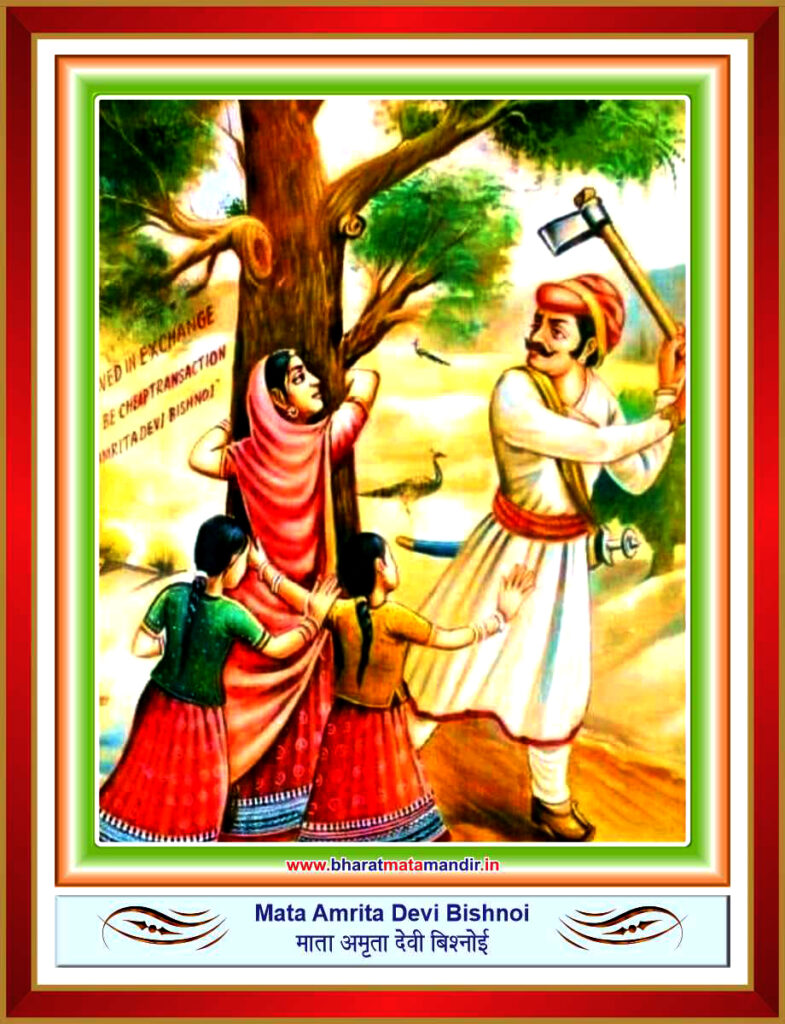
Amrita Devi Bishnoi, popularly known as Mata Amrita Devi Bishnoi, was a legendary environmental protector and an early symbol of ecological conservation in India. She was born in the 17th century in Rajasthan and belonged to the Bishnoi community, which follows strict principles of protecting nature, wildlife, and trees.
Amrita Devi Bishnoi is remembered for her supreme sacrifice during the historic Khejarli incident of 1730 in present-day Jodhpur district, Rajasthan. When the ruler of Jodhpur ordered the cutting of Khejri trees to construct a palace, royal soldiers arrived at Khejarli village. Amrita Devi strongly opposed this act, as the Bishnoi faith considers the protection of trees and nature as sacred.
To stop the soldiers, Amrita Devi hugged a Khejri tree and declared:
“Sar santey rookh rahe toh bhi sasto jaan”
(If a tree is saved even at the cost of one’s head, it is worth it.)
She was brutally killed by the soldiers. Following her sacrifice, 363 Bishnoi men, women, and children gave their lives while protecting trees. Shocked by this mass sacrifice, the ruler immediately stopped the tree-cutting and issued a royal decree protecting trees and wildlife in Bishnoi areas.
Mata Amrita Devi Bishnoi is remembered as India’s first environmental martyr. Her sacrifice laid the foundation for future environmental movements like the Chipko Movement. Today, the Amrita Devi Bishnoi Wildlife Protection Award is given by the Government of India in her honor.
Her life stands as an eternal inspiration for environmental conservation, courage, and selfless sacrifice in defense of nature. 🌳